
A VMI manufacturing logistics case driven by WMS execution, dispatch visibility and exception control.
This case is not about a single warehouse action. It shows how supplier planning, VMI warehousing, outbound execution, short-haul delivery and final plant-side arrival can be coordinated as one manufacturing logistics control flow.
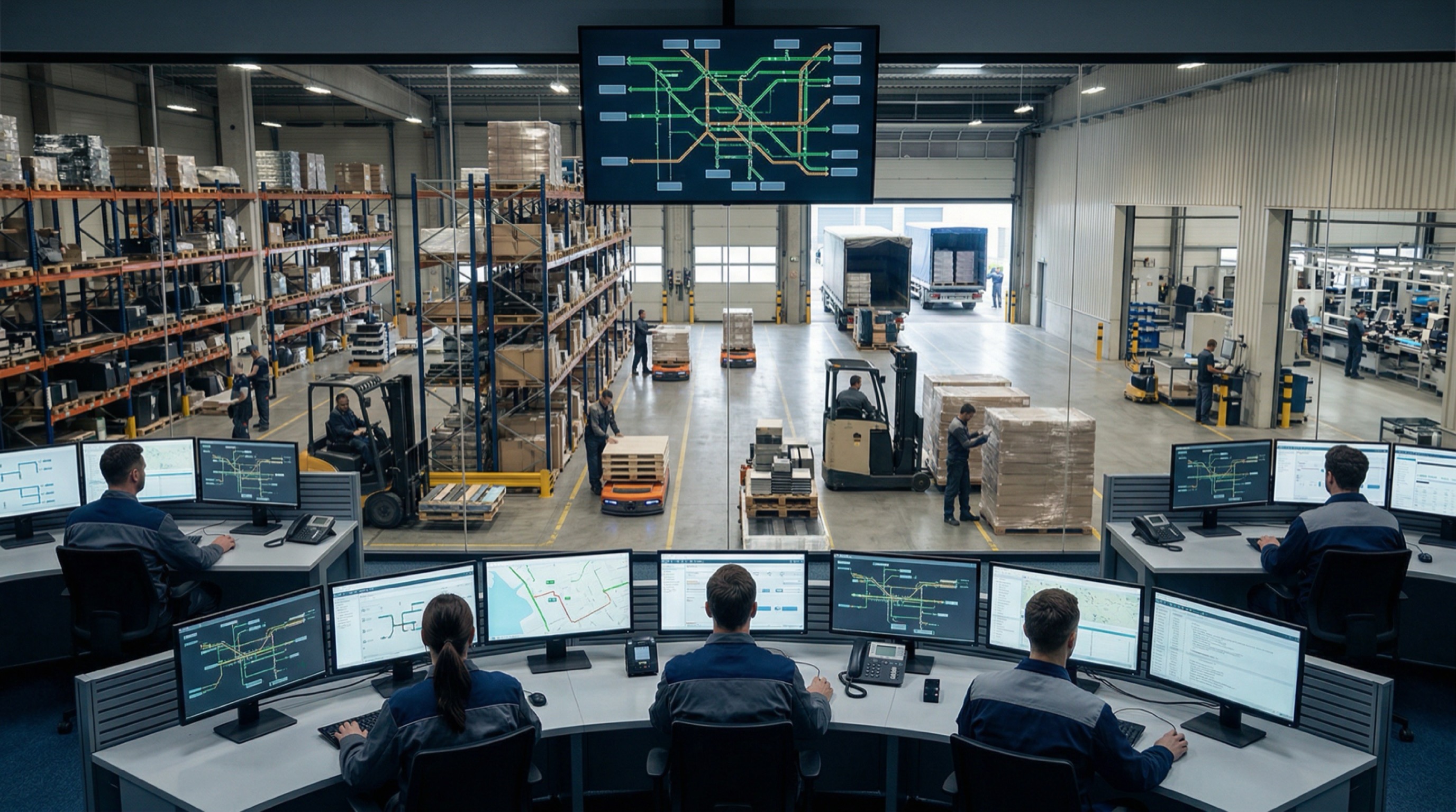
A multi-node manufacturing logistics environment
The operating model starts with supplier-side planning, continues through VMI warehouse receiving and putaway, then moves into outbound execution, short-haul distribution and final delivery to the OEM side. The core requirement is to keep these nodes synchronized with production demand rather than letting each team work in isolation.
The real pressure is coordination, not only movement
- Supplier arrival timing and production-side material demand do not naturally stay aligned
- Receiving, putaway, outbound and forklift execution need clearer task visibility and handoff rules
- Transport status, shortages and abnormal orders need faster closed-loop control before they become production risk
One control layer across planning, warehousing and transport
The strongest version of this project combines supplier-side arrival planning, VMI warehouse receiving and inventory control, task-driven outbound execution, forklift confirmation with tag or RFID assistance, short-haul dispatch and transport visibility into one coordinated execution structure.
This is where WMS, TMS and execution logic meet
Supplier-side SNC data provides expected arrivals, production-side requests define demand timing, warehouse execution controls receiving and outbound, and dispatch visibility closes the loop. What makes the case valuable is not one module alone, but the consistency between physical movement, task logic and system records.
What changes after rollout
- Better synchronization between supplier arrivals and production demand
- Stronger control over receiving, putaway, outbound and line-side delivery timing
- Faster visibility into shortages, delays and abnormal orders, with a better base for later AGV/WCS expansion
Move from this workflow case into product, integration and survey pages
This case helps explain why many AGV projects become system projects. AGV handles repetitive transport execution, while WMS/WCS and dispatch logic define tasks, priorities, handoffs and exception visibility.